


Alone at Christmas — what really helps

Spending Christmas alone is more common than it looks — and it feels harder than any other day of the year. Not because people have more company on other days, but because on these two evenings everyone else seems to be sitting together. This text explains why that is, what support is actually available and how to shape the days rather than simply endure them.
Why these days weigh more
An ordinary Thursday evening alone goes unnoticed. 24 December doesn’t, and the difference lies not in the situation but in the comparison. Loneliness arises from the gap between what you have and what you consider normal — and at Christmas that yardstick is louder than ever: adverts, greeting cards, stories of family evenings. On top of that, everyday structure falls away: no work, closed shops, appointments put on hold. That explains why two days can feel like two weeks.
The comparison is skewed
What you see is a selection: the photos that get shared and the stories that are easy to tell. What you don’t see are the people travelling to a family they argue with; those who sit out of duty where they don’t want to be; the many who work in care, emergency services or shifts. And those who spend it just as alone as you — but alone, and therefore invisible. It isn’t a small group. Taking that seriously doesn’t take the sadness away, but it does take away the shame.
Support that actually exists
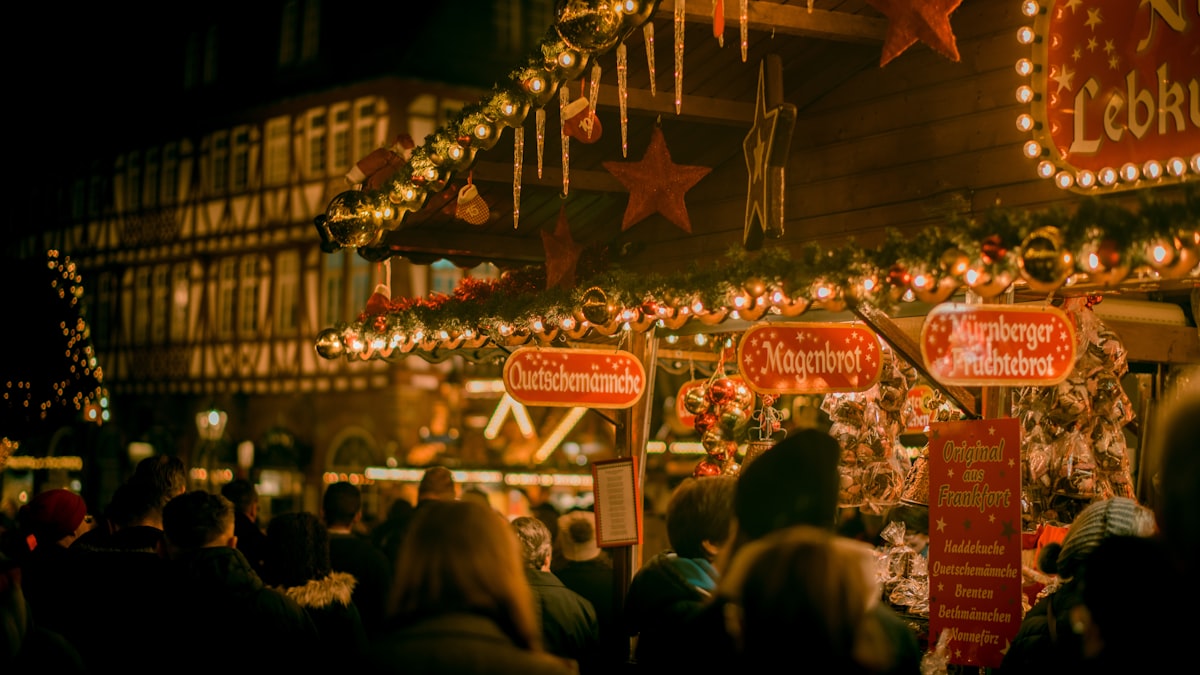
In almost every larger city there are open Christmas gatherings: church congregations invite people to a meal on Christmas Eve, and railway station missions, welfare organisations and neighbourhood centres host tables you can join without registering and without any religious affiliation. Many of them are only announced in December, so it’s worth checking the websites of Diakonie, Caritas and your city during Advent. If you prefer something smaller: in many cities people invite each other privately, often through neighbourhood platforms. And the Christmas markets that are still open are places where nobody stands out for coming alone.
Inviting others yourself is the stronger move
The most effective move is also the most uncomfortable: don’t wait for an invitation, extend one yourself. If you suggest a walk on 26 December or a cooking evening on 27 December, you’ll find a surprising number of people who also don’t know where to go between the holidays — even from within families. And the advantage is twofold: if you invite, you’re not sitting at a table with strangers, you decide the place, the time and the setting. How to start without forcing yourself is explained in Invite someone yourself instead of waiting.
Shape the days instead of enduring them
An empty day is harder than a full one, even if nothing big happens in the full one. What helps is a plan with three fixed points, however small: out of the house in the morning, cook something at midday, watch or read something specific in the evening. Not because that saves the evening, but because a day with structure passes faster than one without. Two more things are worth doing: phone someone instead of texting, and do something somebody else needs — a shift at a food distribution, a message to someone who is also alone. Being needed works against this feeling better than distraction.
What you don’t have to do
You don’t have to be grateful, think positively or prove to anyone that you’re fine. And you don’t have to go to a family celebration where you feel worse than you would alone — duty is no reason, and declining without a guilty conscience applies on holidays just as much. Something else that doesn’t help: getting through the days with alcohol. It numbs you in the evening and amplifies the next morning exactly what it was supposed to numb.
When it gets too hard
For many people the holidays are the hardest time of the year, and counselling services know that. The TelefonSeelsorge (German telephone helpline) is staffed around the clock, including on Christmas Eve and the public holidays — free and anonymous on 0800 111 0 111, 0800 111 0 222 and 116 123, and on its website also by chat and email. For older people there is Silbernetz on 0800 4 70 80 90. If your life is in immediate danger or you’re having thoughts of suicide, the emergency number 112 is the right one, straight away. You don’t have to be in a crisis to call; “I’m feeling bad today and I have nobody to talk to” is reason enough. More services are listed in Help with loneliness.
And afterwards
The days between Christmas and New Year are the most socially open of the year: lots of people are off work, few have plans, and the barrier to a spontaneous get-together has never been lower. If you notice in December that the holidays were hard, January is the best time to start something regular — it then doesn’t coincide with a resolution, but with a real occasion. You’ll find where to begin in Small steps against loneliness.
Frequently asked questions
Is it normal to spend Christmas alone?
Yes, and there are far more people than it appears. What’s visible are the shared photos and the stories that are easy to tell — not the people in care, emergency services and shift work, not those who sit somewhere out of duty, and not those who spend it just as alone and so remain invisible.
Why does Christmas feel harder than other days alone?
Because loneliness arises from the gap between what you have and what you consider normal — and at Christmas that yardstick is louder than ever. On top of that, everyday structure falls away: no work, closed shops, appointments put on hold. An empty day weighs more than a full one.
What support is there on Christmas Eve?
In almost every larger city, church congregations invite people to an open meal on Christmas Eve, without registration and without any religious affiliation. Then there are railway station missions, welfare organisations and neighbourhood centres. This is mostly announced only in December — it’s worth checking the websites of Diakonie, Caritas and your own city during Advent.
What can you do on your own at Christmas?
It’s best to structure the day with three small fixed points: out of the house in the morning, cook something at midday, something specific in the evening. Two more things help: phone someone instead of texting, and do something somebody else needs — a shift at a food distribution, for example. Being needed works against this feeling better than distraction.
Is there someone to talk to on the holidays?
Yes. The TelefonSeelsorge is staffed around the clock, including on Christmas Eve and the public holidays, free and anonymous on 0800 111 0 111, 0800 111 0 222 and 116 123, and on its website also by chat and email. For older people there is Silbernetz on 0800 4 70 80 90. If you’re having thoughts of suicide or your life is in immediate danger, call the emergency number 112 straight away.
Do I have to go to the family celebration if I feel bad there?
No. Duty is no reason, and declining on a holiday is just as acceptable as on any other day. A Christmas alone that you shape yourself can be easier than one you endure beside people you don’t get on well with.
Between the holidays is when most is possible
On Sponties you’ll find people near you for a walk or a cooking evening — even on public holidays. Free, no ads and no real names required.