


Making friends after 50: why the best friendships are still ahead of you

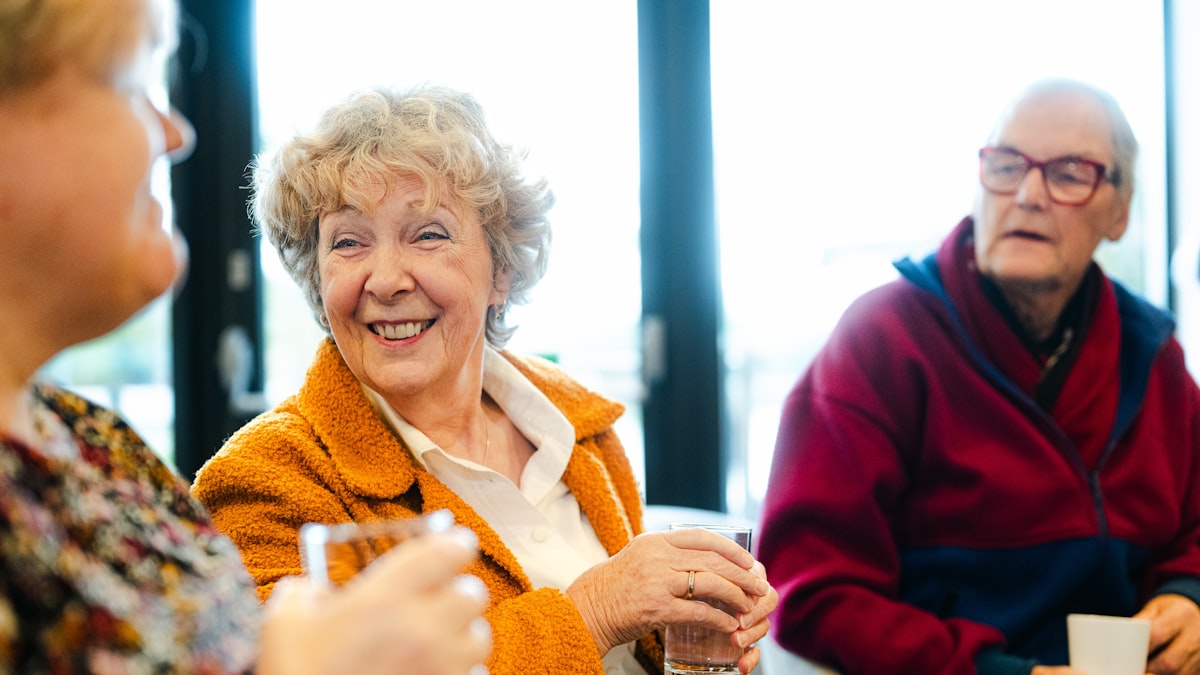
By 50 you’ve mostly learned who you are and what you no longer need, and at the same time you notice that your circle of friends has gone quieter. Children move out, colleagues change jobs, old friends have moved away. The good news: in this phase two things come together that rarely did before, more time and less fear of what others think. New friendships can be built from exactly that.
What’s different at 50 compared with 30
At 30 what you lack most is time; at 50 what you lack most is the occasion. If you’ve lived in the same structures for 20 years (work, family, neighbourhood), you no longer have natural opportunities where new contacts come up on the side. In return, a hurdle that’s still big at 30 falls away: the worry of making a fool of yourself. Most people over 50 report that they approach others much more easily than they used to; they just do it less often because the opportunity is missing.
Your circle of friends thins out, and that’s normal
From about the mid-20s, the number of close friendships declines steadily in almost every study. That isn’t because people become less friendly, but because of moves, break-ups, caring for relatives and simply tight time over two decades. If you know that, you take it less personally. A circle of friends after 50 has rarely got smaller because something went wrong. It has got smaller because it wasn’t topped up.
Suddenly there’s time
The second half of life often brings a window of time that never existed before: the children have left home, the job is routine, retirement is coming into view. Many experience this as emptiness at first. But it is the best time of all to start something regular: a choir, a walking group, volunteering, a course. Regularity is the decisive factor: friendships almost build themselves out of repeated encounters, and almost never out of one-off ones.
Where people over 50 actually meet new people
The most honest answer is unspectacular: where something happens regularly. Clubs are by far the most effective route in this age group and much more accessible than their reputation suggests. After that come volunteering and the adult education centre (Volkshochschule, VHS). With volunteering, you also get talking through the shared task rather than about yourself. Walking groups, choirs and sports classes work for the same reason. And the neighbourhood is underrated: if you get to know your neighbours in this phase, you have contacts five minutes away.
Digital isn’t a contradiction
The prejudice that platforms are for young people persists stubbornly and is no longer true. In the second half of life especially, people are particularly successful there, because they usually know more precisely what they want and are less likely to say yes out of politeness. All that matters is the right format: swipe apps from the dating world disappoint most people because nothing concrete happens afterwards. What works are services where a shared activity is the focus. An overview of the options helps with choosing.
The hurdle isn’t age, it’s the first step
Almost everyone who has tried it says the same: the hardest part was signing up once or going once. After that it went more easily than expected. It helps to set yourself a small, clearly limited start: go to one open meet-up once, without committing to anything. And it helps to invite people yourself instead of waiting: whoever invites decides the place, the time and the setting, and at 50 that is far more pleasant than sitting down in a group of strangers.
A realistic timeframe
Don’t count in weeks, count in months. A nice first meet-up doesn’t turn into a friendship; twenty meet-ups over a year very probably do. The much-quoted benchmark of around 50 hours together before a casual friendship sounds discouraging, but above all it’s a relief: it’s not your fault if things don’t feel familiar the third time. It’s simply still too early.
Frequently asked questions
Is it too late to make new friends at 50?
No. What changes is the route, not the possibility: after 50, friendships rarely happen by chance, but through regular shared activities. If you reliably go to the same place once a week, you’ll build a solid circle within a year.
Where are you most likely to meet new people after 50?
The most effective places are those with repetition built in: clubs, volunteering, choirs, adult education (Volkshochschule) courses, walking groups and sports classes. Volunteering has the added advantage that you get talking through the shared task rather than about yourself.
Are there platforms specifically for people over 50?
Yes, some providers clearly target this age group, such as Meet5. There are also platforms open to all ages, like Sponties, which sort by interests rather than by year of birth. Both have advantages: an age group brings similar life situations, a mixed one brings more variety.
Why does your circle of friends get smaller after 50?
Because it hasn’t been topped up for two decades. Moves, job changes, break-ups, raising children and caring for relatives cost time for contact, and in studies the number of close friendships declines steadily from the mid-20s. That is a normal course of events, not a personal failing.
How do you approach new people without seeming pushy?
Most easily through the situation you’re in together: the course, the hike, the weather at the meeting point. More important than the opening is the ending: a concrete suggestion to meet again. Without it, it stays a nice chat.
Open to all ages, free, no pressure
On Sponties, things are sorted by interests rather than by year of birth. Take a look at what’s happening near you. Signing up takes a minute.