


Outdoors in winter: ice skating, sledging and winter hiking with others

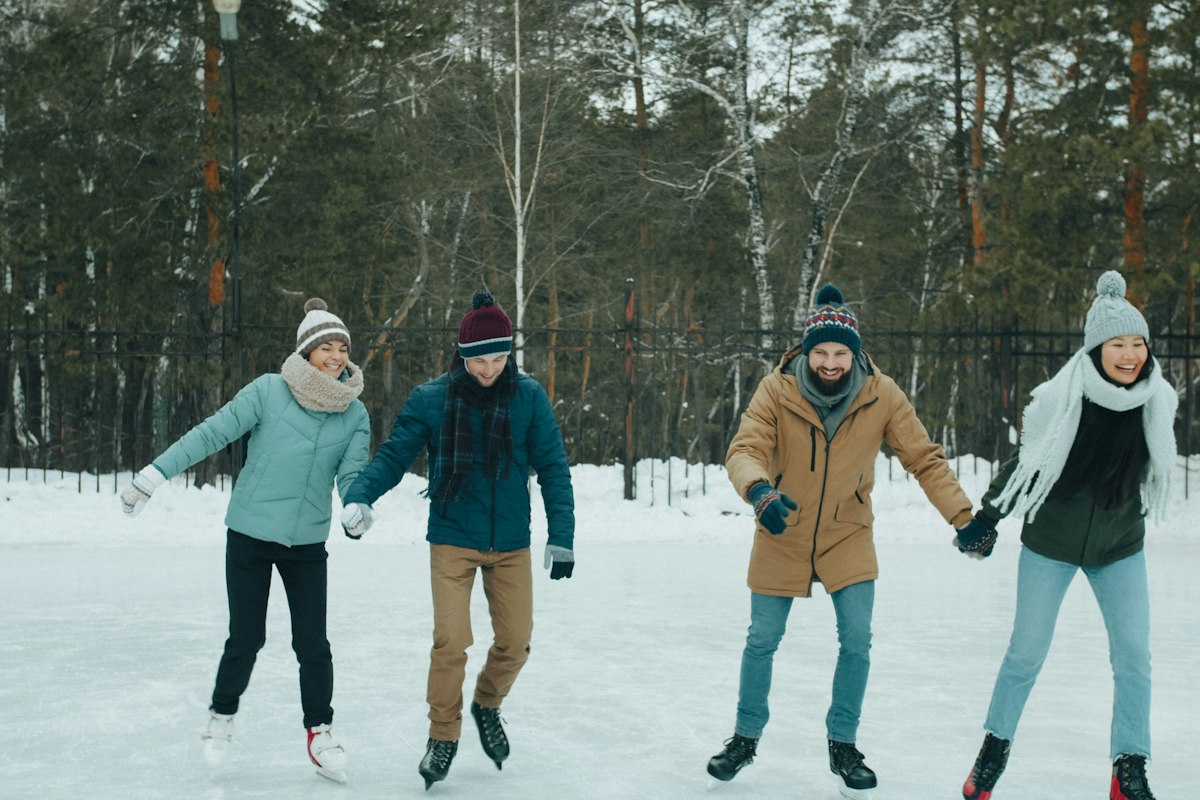
Photo: Vitaly Gariev on Unsplash
In winter life moves indoors – and so do most plans. Yet the cold season outside has something no café can offer: exercise, fresh air and occasions where you get closer almost without noticing. Here is what you can do outdoors in winter and how to plan it with others.
Why exercising outdoors brings people together
When you do something together, you don’t have to invent a conversation. On the ice you laugh at the same wobbles, when sledging you wait together at the top of the slope, when winter hiking you walk side by side instead of sitting opposite each other. That is exactly what makes these formats so good for people who don’t know each other yet – and for anyone who wants to meet new people in winter.
Ice skating: the easiest way in
From the end of November to February, open-air ice rinks open in many cities, plus the public sessions at ice stadiums. You can hire skates almost everywhere, and beginners are in the majority. Natural ice on lakes and ponds is tempting, but only an option if the city has explicitly opened the area – falling through the ice is one of the biggest dangers outdoors in winter.
Sledging: when the snow comes, be quick
Snow has become rare in many cities and often stays for only a day or two. If you want to go sledging, you therefore need a group that can be spontaneous: a message in the morning, two hours in the afternoon. Almost every city has a slope where everyone goes when it snows, such as the sledging hill at the Mollbeck in Recklinghausen. Slopes with a clear run-out, without a road or trees at the bottom, are best – and a helmet does no harm for adults either.
Winter hiking: plan shorter, set off earlier
In December and January it gets dark in Germany between four and half past four, earlier in the north than in the south. A winter hike should therefore be shorter than in summer and end in the early afternoon. A flask of tea, a stop at an inn at the end and paths that are passable even in snow make the difference. Low mountain ranges such as the Harz, Sauerland, Thuringian Forest or Black Forest have signposted winter hiking trails, many of them reachable by bus and train – more on that in A day trip without a car. Why hiking connects people so well is explained in Why you should go hiking to make friends.
Bavarian curling (Eisstockschießen) and other winter sports for groups
Bavarian curling (Eisstockschießen) comes from the Alpine region but can now be found in many cities – on ice rinks, at Christmas markets and on dedicated lanes, often bookable for groups. It is easy to learn, can be played with a drink in your hand and works for people who otherwise do no sport. If you want more, try cross-country skiing: many winter sports resorts offer taster courses and hire equipment. You will find more ideas under Sport & exercise and Nature & outdoors.
Cold, darkness, ice: what to sort out beforehand
Three things belong in the first message for winter plans: when it starts, when it gets dark and what happens if it is icy or rainy. A plan B takes the pressure off – a walk instead of sledging, a café instead of ice skating. Add several layers instead of one thick jacket, warm hands and feet and, for dusk, something bright on your clothes.
Warming up afterwards
The best part of a winter day outdoors is often the bit afterwards: hot chocolate in a café, soup at home, an evening at the thermal baths. If you plan that in from the start, two hours outside become a whole afternoon – and the meet-up gets an ending everyone looks forward to. What to sort out before a visit to the thermal baths together is explained in Going to the thermal baths together. And if it really is too unpleasant outside: meeting places indoors.
Frequently asked questions
What can you do outdoors in winter with friends?
Ice skating, sledging, winter hiking, Bavarian curling (Eisstockschießen) or a walk with a flask. Activities with a warm destination afterwards, such as a café or thermal baths, work best. If you do something like this regularly, you can make new friends in winter, too.
Where can you go ice skating in winter?
From the end of November to February on the open-air ice rinks that many cities set up, and at ice stadiums during public sessions. Only step on natural ice if the city has explicitly opened the area.
When does it get dark in winter?
In December and January it gets dark between about 16:00 and 16:30, depending on the region, earlier in the north than in the south. Winter hikes should therefore end in the early afternoon.
How do you find people to go sledging or ice skating with?
The easiest way is a group that can be spontaneous: on Sponties you can set a date at short notice when there is snow, or say yes to meet-ups that others have set. A fixed meeting point and a plan B for bad weather are part of it.
What do you wear for winter hiking?
Several thin layers instead of one thick jacket, waterproof shoes with a good tread, a hat and gloves. A flask and something bright on your clothes for dusk make sense.
Find people for your next day outdoors in winter
On Sponties you will find people in your city for the ice rink, sledging hill and winter hike – or set a date spontaneously when there is snow. Free, ad-free and no real name needed.